Béla Barényi (1907–1997) is remembered as the father of passive car safety at Mercedes-Benz. In the 1950s a German court confirmed that he had drawn the essential features of the Volkswagen engine layout before Ferdinand Porsche. Less known is that his early career is closely linked to Josef Ganz: Ganz printed his articles, encouraged him to come to Germany and found him his first job in the motor industry.
Two lives from Austria-Hungary
The two engineers came from similar backgrounds. Ganz was born in Budapest in 1898, the son of the German-born journalist Hugo Ganz; his birth certificate records that his father was a Hungarian citizen. He grew up in Vienna, studied there and in Darmstadt, and became a German citizen in 1914. Barényi was born in 1907 in Hirtenberg near Vienna and went to school in Vienna. Christof Vieweg calls Ganz "almost a fellow countryman" of Barényi. Both changed nationality several times in their lives – Barényi was Austrian, Hungarian, Czechoslovak and for a time stateless; Ganz was Hungarian, German, stateless after 1938 and finally Australian.
Year by year
Josef Ganz on the left, Béla Barényi on the right, and in the middle the events in motoring history that shaped both.
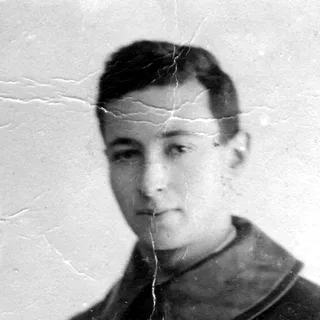
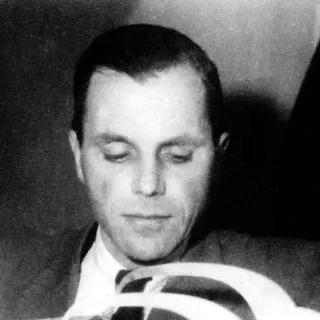
- 1898 Josef Ganz
Born on 1 July in Budapest, son of the journalist Hugo Ganz; grows up in Vienna.
- 1907 Béla Barényi
Born on 1 March in Hirtenberg near Vienna.
- 1910 Josef Ganz
Aged eleven, the Vienna schoolboy obtains a patent for a safety net for electric trams; newspapers as far as Milan and Bristol report on the “inventive prodigy”.
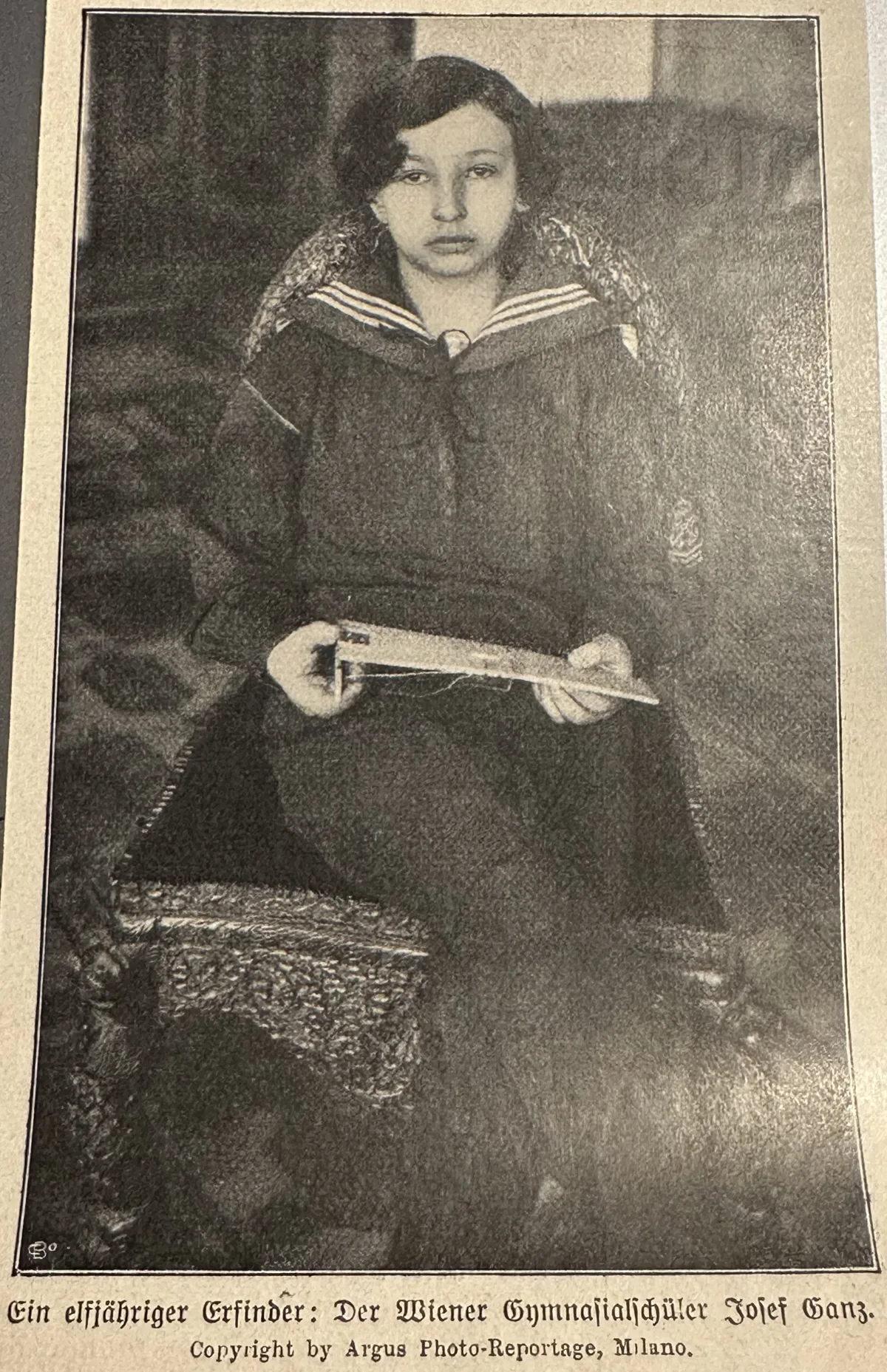
“An eleven-year-old inventor: the Vienna grammar-school pupil Josef Ganz”, press photo, c. 1910 (Argus Photo-Reportage, Milan) - 1914 Josef Ganz
Becomes a German citizen.
- 1923 Josef Ganz
First sketches of a small, light car.
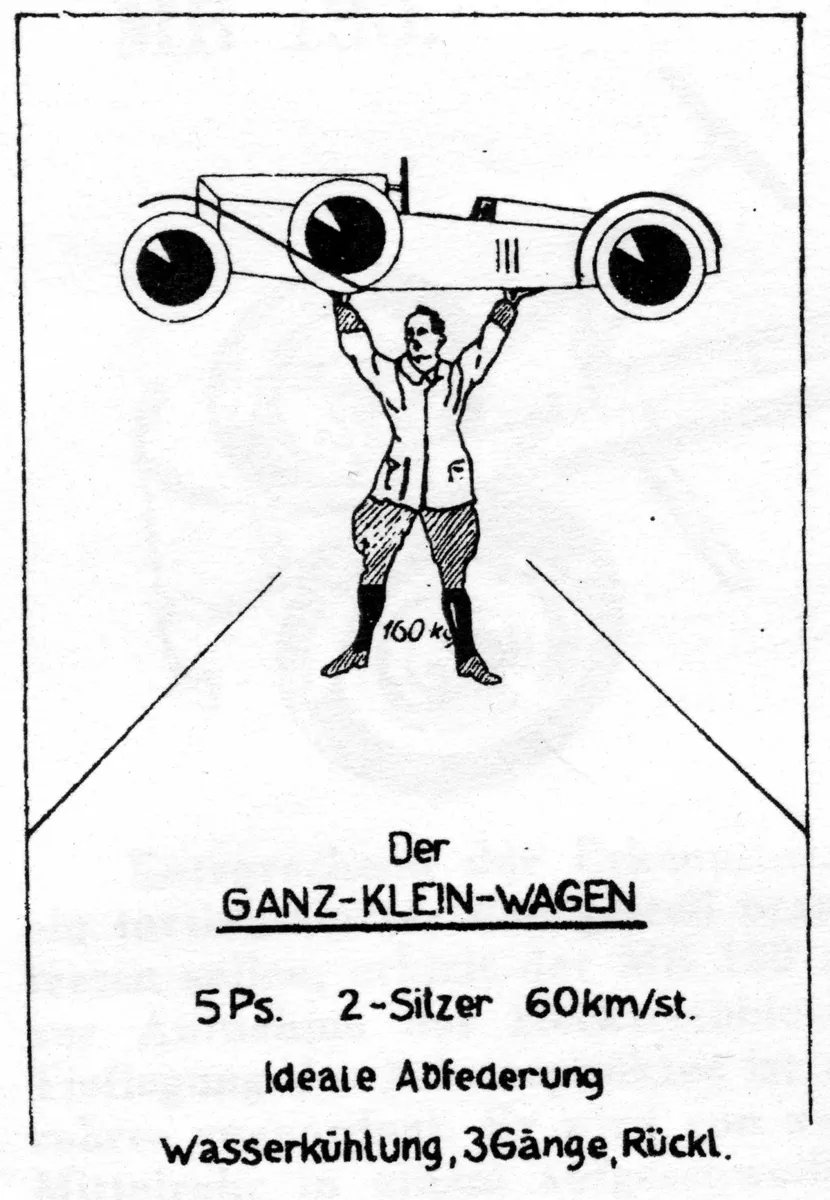
Prospectus Ganz-Klein-Wagen, 1923 ContextHans Ledwinka’s Tatra 11 goes into production with a backbone tube chassis and swing axles.
- 1924 Béla Barényi
Files his first patent application in Vienna, aged 17.
- 1925/26 Béla Barényi
Draws “Der kommende Volkswagen” (the coming Volkswagen) as a school examination piece: tube frame, air-cooled boxer engine at the rear, streamlined body.
- 1927 Josef Ganz
Becomes editor-in-chief of Klein-Motor-Sport, renamed Motor-Kritik in 1929.
- 1928 Béla BarényiJanuary
Austrian patent for a single-beam chassis registered.
From February a designer at the Steyr body plant in Vienna; laid off in September, he joins ÖAF, formerly Austro-Fiat.
- 1929 Josef Ganz
German patent application for a chassis with a rear central tube (DE 528 643).
Béla BarényiMotor-Kritik prints his article on the single-beam chassis.
- 1930 Josef Ganz
Builds the Ardie-Ganz prototype. From September he advises Daimler-Benz.
Béla BarényiLa Vie Automobile in Paris presents one of his body designs.
- 1931 Josef Ganz
Builds the Maikäfer prototype with Adler. Daimler-Benz declines his offer to withdraw from his contract.
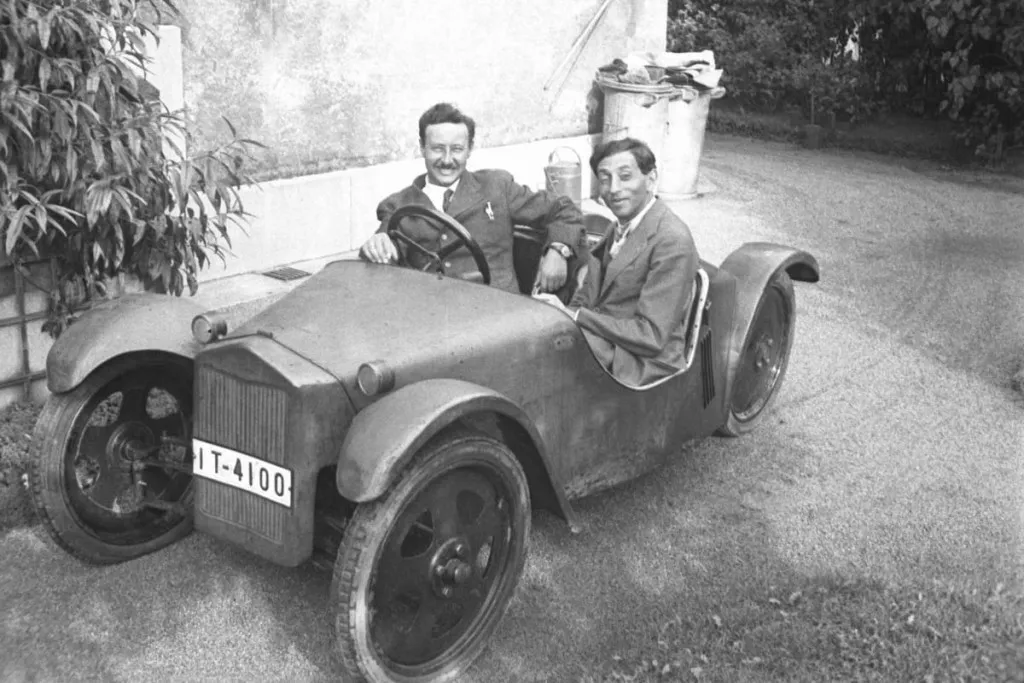
Maikäfer, 1931, with Paul Jaray Béla BarényiÖAF lets him go at the end of the year; he is unemployed again.
ContextMercedes-Benz presents the 170, its first car with independent suspension all round.
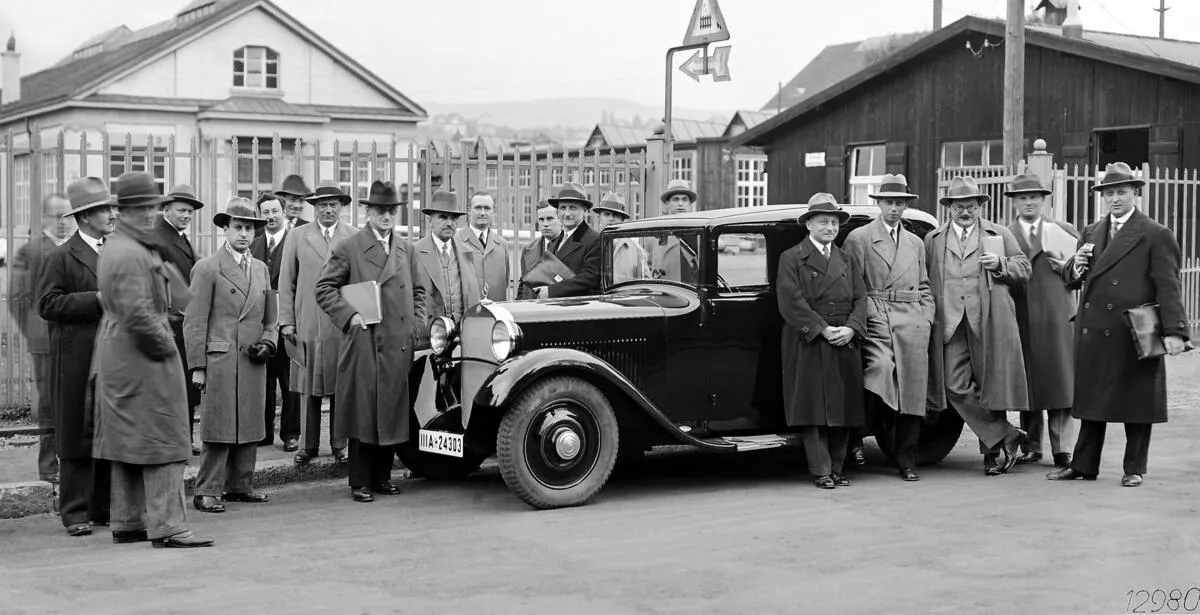
Mercedes-Benz 170, 1931 - 1932 Béla BarényiAugust
His article “Experimentum crucis” in Motor-Kritik argues for rear engine, tube chassis and streamlined body.
- 1933 Josef GanzFebruary
The Standard Superior, built on his patents, is shown at the Berlin motor show.
MayArrested by the Gestapo.
NovemberDaimler-Benz ends his contracts.
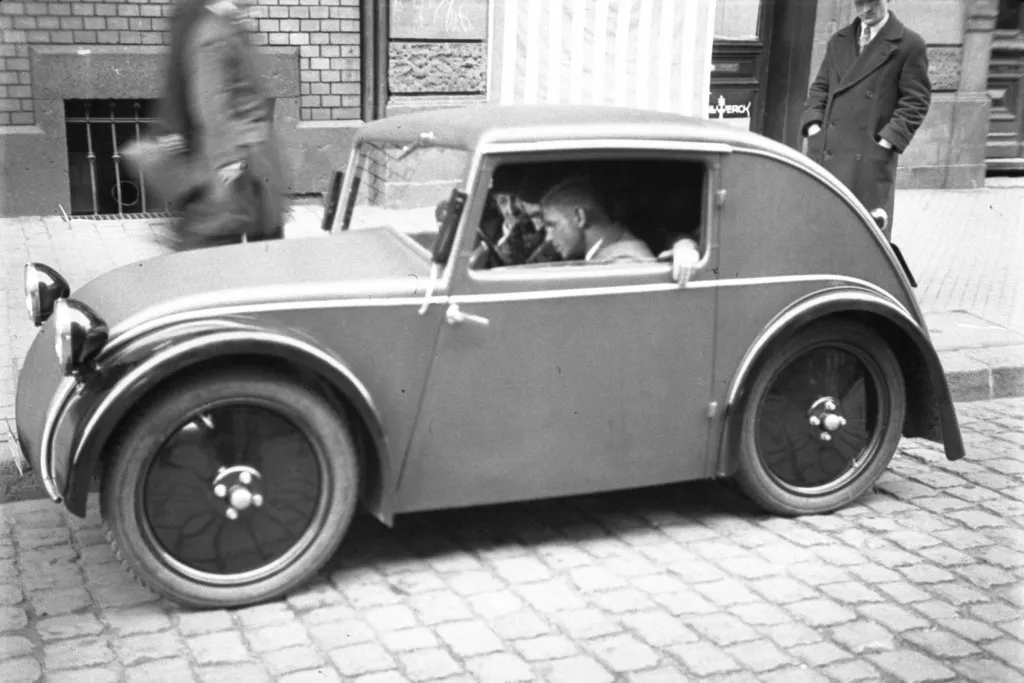
Standard Superior, 1933 Béla BarényiOut of work. On 3 October Ganz writes to him that Germany offers him “a better field of activity than Austria”.
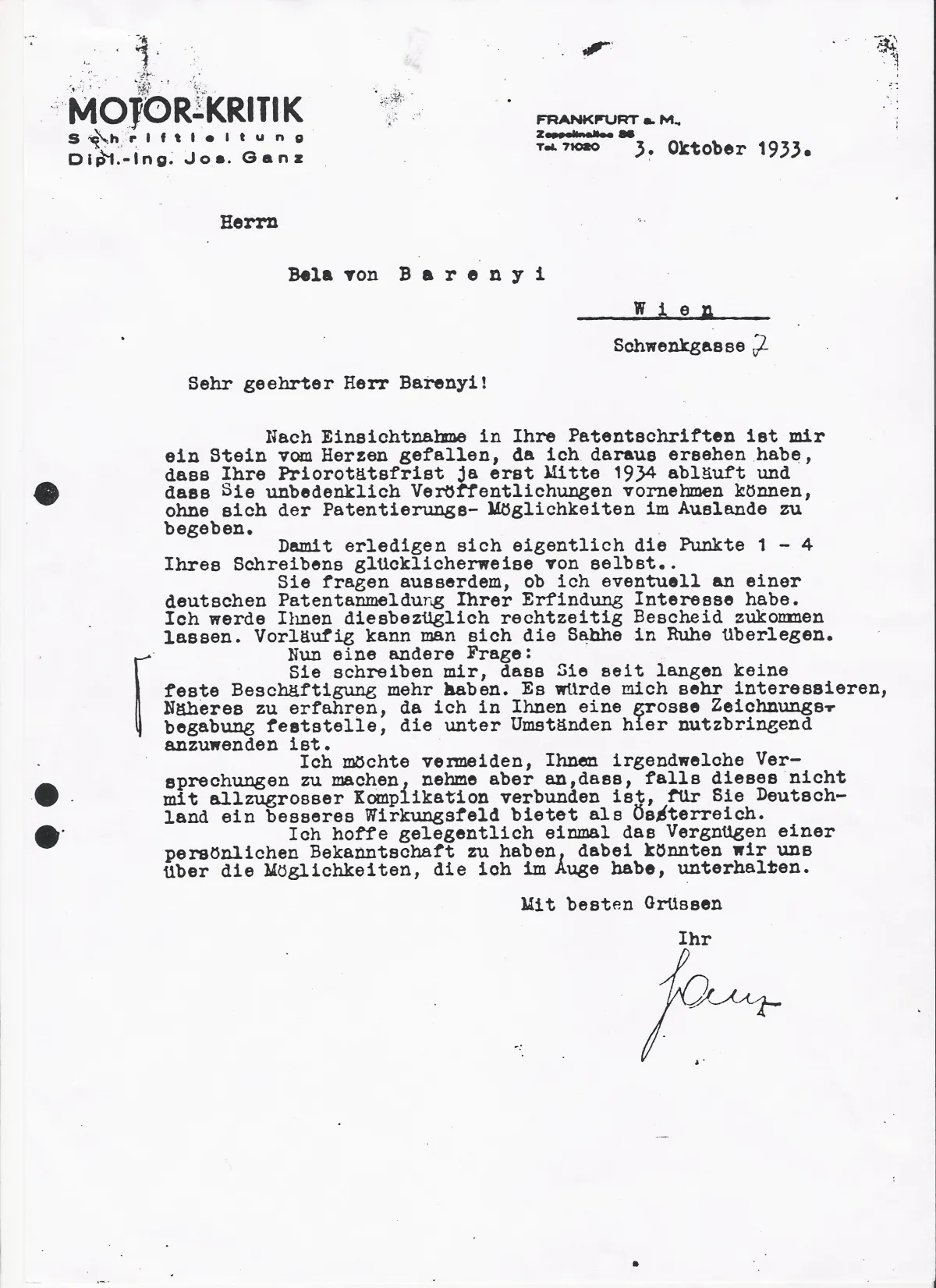
Ganz to Barényi, 3 October 1933 (Schilperoord archive) ContextOpening the Berlin motor show in February, Hitler calls for motorisation on the broadest level.
- 1934 Josef Ganz
Recommends Barényi to Gustav Röhr at Adler. Leaves Germany later that year.
Béla BarényiArrives at Ganz’s house in Frankfurt with twenty pfennigs (January) and starts at Adler on 1 February.
MarchMotor-Kritik puts his “coming Volkswagen” on the cover.
In August he moves to an engineering company in Berlin.
ContextAt the Berlin motor show in March, Mercedes-Benz shows the rear-engined 130 H and Tatra the streamlined 77.
- 1935 Josef GanzMay
Settles in Switzerland. Standard ends production of the Superior.
Béla BarényiSent to Paris (October); first patents for his cell-type body construction.
- 1937 Josef Ganz
First prototypes of a Swiss Volkswagen.
Béla BarényiBack in Berlin after being questioned by the French secret police.
- 1938 Josef GanzAugust
Stripped of his German citizenship.
Béla BarényiMotor-Kritik interviews him on the “cell vehicle” (May); he leaves his Berlin employer.
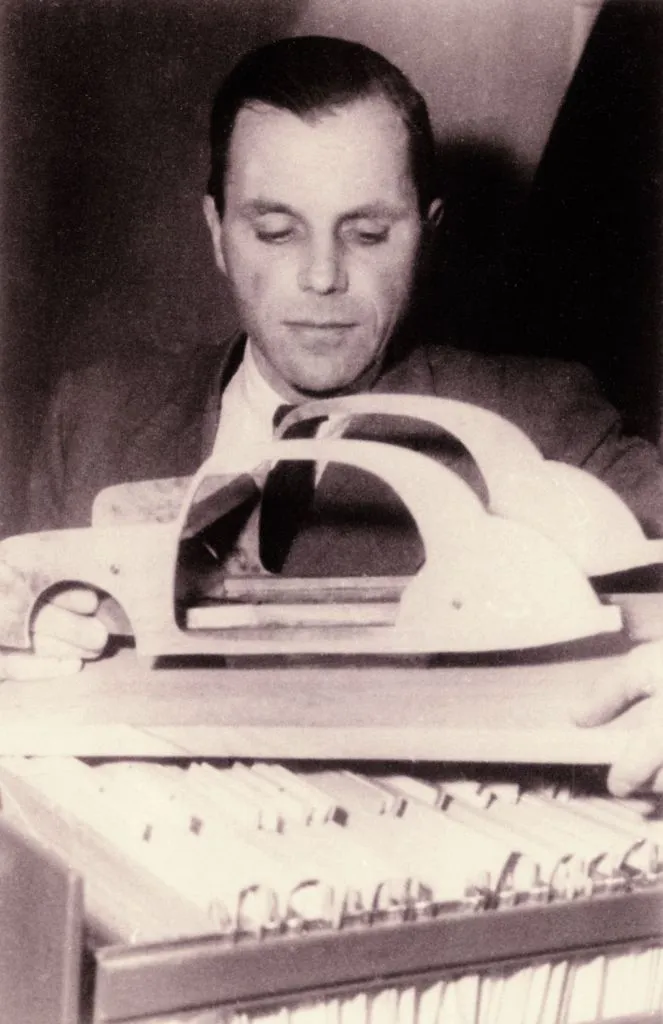
Béla Barényi with a body model, around 1939 (Wikimedia Commons, public domain) ContextMayThe foundation stone of the Volkswagen factory is laid.
- 1939 Béla Barényi
Hired by Daimler-Benz after an interview with chairman Wilhelm Haspel, arranged by his former Steyr colleague Karl Wilfert; from 1 August he works in Sindelfingen.
- 1941 Josef Ganz
After more than seven years, a Berlin court decides Tatra’s patent case in his favour.
- 1945 Context
Series production of the Volkswagen Beetle begins under British control.
- 1948 Béla Barényi
Opens an engineering office in Stuttgart and tells a US journalist about his 1925 design. Soon afterwards he signs a new contract with Daimler-Benz.
- 1950 Josef Ganz
Moves to Paris.
- 1951 Josef Ganz
Emigrates to Australia and later works for General Motors-Holden.
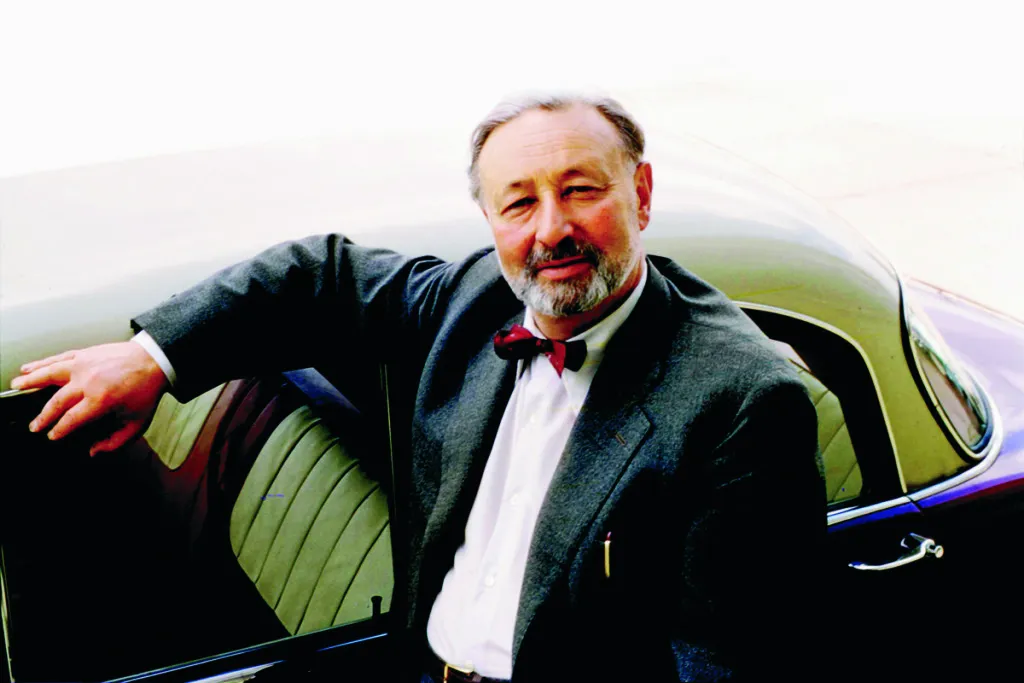
Australia, 1960s Béla BarényiPatent application for a passenger car with deformable front and rear sections around a rigid cell (DE 854 157, January). Two books deny him any share in the Volkswagen idea.
- 1952–54 Béla Barényi
Sues both authors. On 17 December 1954 the patent chamber in Mannheim finds that he drew the decisive features of the Volkswagen engine layout before Porsche.
- 1959 Context
The Mercedes-Benz W 111 is the first production car with a safety body based on Barényi’s crumple-zone patent.
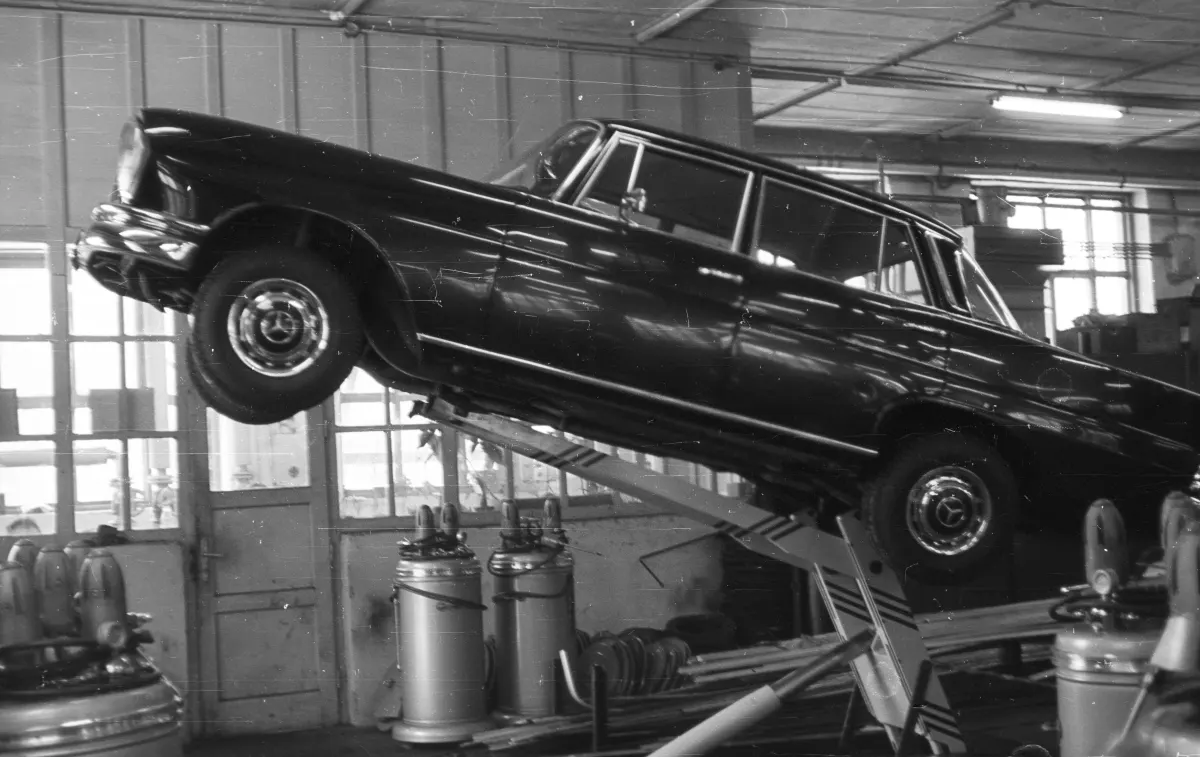
Mercedes-Benz W 111 (Fortepan 22431, Pálinkás Zsolt, CC BY-SA 3.0) - 1961 Josef Ganz
Offers Volkswagen his help in the patent case brought by Tatra.
- 1965 Josef GanzOctober
Volkswagen settles with Tatra. The German embassy in Australia takes up an initiative to honour him.
- 1967 Josef Ganz
Dies in Australia, largely forgotten.
- 1997 Béla Barényi
Dies on 30 May, honoured as the father of passive car safety.
Two early ideas of a car for the people
Ganz made his first sketch of a small car in 1923, then still as a single-seater meant to replace the motorcycle. From 1928 he campaigned in his magazine for a light car with a central tube frame, independent suspension, swing axles and a rear or mid-mounted engine. In 1929 he applied for a German patent on a chassis that combined a front frame with a rear central tube (DE 528 643). He then built the Ardie-Ganz prototype (1930) and the Maikäfer (1931); the Standard Superior followed in 1933.
Barényi drew his project "Der kommende Volkswagen" ("The coming Volkswagen") in 1925/26 as a school examination piece. Its rear-engined version combined a central tube frame, a streamlined body and an air-cooled boxer engine behind the rear axle with the gearbox in front of it. The dating was later confirmed by the German Federal Criminal Police Office. His Austrian patent filing for a single-beam chassis dates from January 1928.
Both built on an existing idea: the Tatra 11 by Hans Ledwinka had used a backbone tube chassis and swing axles since 1923 – and Ganz himself drove a Tatra. On paper, Barényi's 1925 design came closer to the later Beetle; on the road, Ganz was the one who built and tested such cars and brought them into production. See also Josef Ganz and Tatra.
How Ganz helped Barényi
Barényi did not wait to be discovered. As a student in Vienna he sent his sketches to motoring journalists in Germany and France – among them, according to Christof Vieweg, Josef Ganz, editor of Motor-Kritik, and André Caputo of the French magazine Omnia.
As editor of Motor-Kritik, Ganz gave the young engineer a platform:
- 1929: Barényi's article "Konstruktion eines Einzelträger-Chassis" (design of a single-beam chassis) appears in Motor-Kritik.
- 1930: his brother Friedrich Barényi writes "Fortschritt durch Rohrchassisbau!" (progress through the tube chassis), illustrated with drawings by Béla.
- August 1932: Barényi's "Experimentum crucis" argues for the combination of rear engine, tube chassis and streamlined body.
- March 1934: the motor show issue of Motor-Kritik puts Barényi's "coming Volkswagen" on its cover.
When Ganz learned in 1933 that Barényi was out of work, he wrote to him on 3 October:
„Ich möchte vermeiden, Ihnen irgendwelche Versprechungen zu machen, aber ich nehme an, dass für Sie Deutschland ein besseres Wirkungsfeld bietet als Österreich.“
("I would rather not make you any promises, but I believe that Germany offers you a better field of activity than Austria.")
In January 1934 Barényi arrived in Frankfurt with twenty pfennigs in his pocket and went straight to Ganz's house. Ganz recommended him to Gustav Röhr, chief engineer at Adler, who hired him from 1 February 1934 – Barényi's first job after almost three years of unemployment. Both Vieweg and Harry Niemann's Barényi biography, published by Mercedes-Benz, tell this story.
Parallel struggles
Within months the roles reversed. Later in 1934 Ganz, persecuted as a Jew, left Germany; Barényi moved on to Berlin and later to Daimler-Benz. Both spent years fighting for recognition against the story that the Volkswagen had a single father. Barényi eventually won his case in court (see below). Ganz, in exile, fought his own cases and was largely forgotten.
They also shared a critical view of the car that was finally built. Barényi called Porsche's Volkswagen a failure in 1948 and argued for a three-seater; Ganz described the rear-engined Mercedes-Benz 130 H as "a car with an outboard motor".
Barényi in court, 1952–1955
In 1951 two books presented Porsche as the sole creator of the Volkswagen. A Porsche biography published under the pseudonym Herbert A. Quint – the journalist Richard von Frankenberg – called Barényi's claims "absurd". Horst Mönnich's novel Die Autostadt mocked him as a dreamer – and dismissed Josef Ganz in the same breath:
„Ja, das sind die Schwärmer. Aber es gibt auch ernste Leute. Einer von ihnen ist der Diplomingenieur Ganz. Auch die ernsten Leute haben ihre Schlagworte.“
("Yes, those are the dreamers. But there are serious people too. One of them is the graduate engineer Ganz. The serious people have their slogans as well.")
In February 1952 Barényi sued both authors. He did not only ask for a retraction: they were to state publicly that he had conceived the decisive combination of features of the Volkswagen drivetrain, in particular the position of the engine, long before Porsche. The cases therefore turned on a technical question – who had the idea first.
The courts took evidence on a scale unusual for a libel case. Professor Paul Riekert of the Research Institute for Automotive Engineering at the Stuttgart Technical University was appointed as expert. Friends from Barényi's Vienna years testified before Austrian courts; Hans Breitenstein remembered seeing the full-size plan on brown packing paper "in 1927 or 1928". Barényi commissioned further expert opinions at his own expense, and an expert of the Federal Criminal Police Office dated his drawings to 1925/26 and 1931/32 and found them "original and genuine".
On 17 December 1954 the patent chamber of the Mannheim district court ruled against Mönnich. It found it proven that Barényi had worked out plans revealing the basic layout of the later Volkswagen drivetrain, including the engine position, in 1926 or at the latest by the end of the 1920s – "in any case before Professor Porsche". Porsche's drawings and patents up to April 1932, the court added, contained "not even half" of the combination of features found in the Volkswagen engine. It expressly left open whether Porsche had known Barényi's plans. In July 1955 the case against Frankenberg also ended before the Mannheim court in Barényi's favour. Both cases were closed with settlements, and later editions of Mönnich's novel no longer mention Barényi. He received neither damages nor royalties, and the proceedings consumed much of his savings.
Sources
- Christof Vieweg: Die Akte Volkswagen. GeraMond, Munich 2014, pp. 13, 18, 22, 25–33, 35–37, 138–151, 187.
- Harry Niemann: Béla Barényi – Nestor der passiven Sicherheit. Mercedes-Benz AG, Stuttgart 1994, pp. 41, 43, 44, 66, 89–106, 239.
- Paul Schilperoord: Die wahre Geschichte des VW-Käfers. Huber, Frauenfeld 2011, pp. 16, 197 (English edition: The Extraordinary Life of Josef Ganz).
- Michael Graf Wolff Metternich: "Der streitbare Geist Josef Ganz". Automobil Revue no. 41, 4 October 1990, pp. 69, 71.
- Patent DE 528 643 "Fahrgestell für Kraftfahrzeuge", Josef Ganz, priority 18 June 1929.
- National Archives of Australia, A1838, 1535/25/17 (German citizenship 1914).